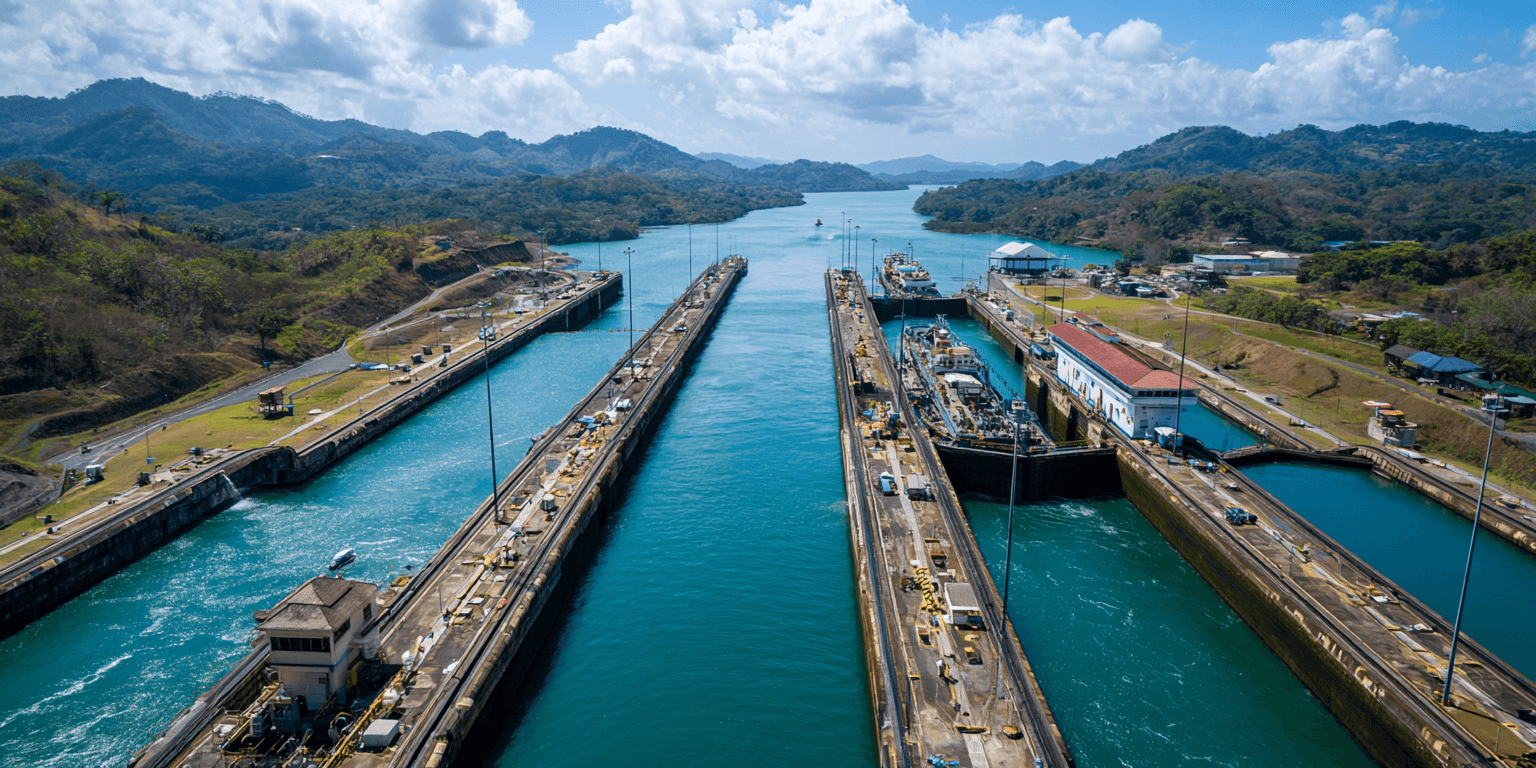
Panama Canal's $8 Billion Gas Pipeline Project Creates Historic Investment Opportunity for Expats

DoPanama Team
Panama Canal's $8 Billion Gas Pipeline Project Creates Historic Investment Opportunity for Expats
President José Raúl Mulino has just announced a game-changing $4-8 billion gas pipeline project running parallel to the Panama Canal that will create 15,600 jobs and generate $1.5 billion annually for the state. According to the Panama Canal Authority, this interoceanic energy corridor represents the largest infrastructure investment since the Canal's expansion, positioning Panama as a regional energy hub and creating unprecedented opportunities for international investors and expats seeking to capitalize on Panama's explosive economic growth. Here's the thing most people don't realize: this isn't just another pipeline - it's a complete transformation of Panama's economic landscape that will ripple through real estate, services, and business sectors for the next decade.
Project Overview: Panama's Largest Infrastructure Investment Since Canal Expansion
Picture this: a massive gas pipeline running the entire length of Panama, from the Atlantic to the Pacific, creating the first interoceanic energy corridor in the Americas. That's exactly what President Mulino announced during his official visit to Japan on September 3, 2025, and the Panama Canal Authority's board has already authorized the selection process to begin.
This isn't some pie-in-the-sky proposal - we're talking about serious infrastructure that will transport liquefied petroleum gas (LPG), ethane, butane, and propane from Atlantic-side terminals to Pacific-side facilities, providing Asian markets with reliable energy supply routes. What makes this particularly brilliant is how it addresses one of the Canal's biggest vulnerabilities: water dependency.
Remember the devastating 2024 drought that cost the Canal approximately $800 million in lost revenues? That's exactly the kind of crisis this pipeline prevents. By creating drought-resistant alternatives for energy transport, Panama is future-proofing its position as a global logistics powerhouse while opening entirely new revenue streams.
The timeline is aggressive but realistic: prequalification begins in 2025, concessionaire selection by Q4 2026, construction from 2027-2030, and operations launching in 2030-2031. According to the Panama Canal Authority, this represents the single largest infrastructure project since the Canal expansion, demonstrating Panama's commitment to economic diversification that goes far beyond just shipping containers.
$4-8 billion total investment creating 15,600 jobs
Source: Panama Canal Authority announcement, 2025
Unprecedented Job Creation and Revenue Generation: What This Means for Expats
Let's talk numbers that actually matter to your life in Panama. During the construction phase alone, this project will generate over 6,500 jobs annually - and we're not talking about just hard-hat positions. We're talking high-skilled positions in engineering, logistics, project management, and technical operations that offer attractive compensation packages for qualified expats.
Once operational, nearly 9,600 permanent positions will be created across operations, administration, and support services. These aren't temporary gigs - they represent career opportunities in Panama's emerging energy sector with competitive salaries reflecting international standards. According to Panama Infrastructure Ministry projections, many of these positions will require specialized skills that aren't readily available locally, creating a massive demand for international talent.
The revenue projections are equally jaw-dropping: $160 million during construction and over $1.5 billion annually once operational. To put that in perspective, that's approximately 30% of current Panama Canal revenues being added to the country's coffers. That money flows into public investment, infrastructure improvements, and services that benefit everyone - from better roads to enhanced healthcare facilities.
But here's where it gets really interesting for real estate investors and expats. The Panama Ministry of Economy estimates a $2.7 billion annual economic contribution during operation when you factor in multiplier effects throughout various sectors. That means increased demand for housing, restaurants, retail, professional services, schools - essentially everything that makes up a thriving expat community.
What most people don't realize is that these major infrastructure projects create what economists call 'agglomeration effects.' When 9,600 high-skilled professionals and their families move to an area, they don't just need houses - they need international schools for their kids, premium grocery stores, quality healthcare, entertainment venues, and all the amenities that make life comfortable. That's where the real investment opportunities emerge for savvy expats.
$2.7 billion annual economic contribution during operation with multiplier effects
Source: Panama Ministry of Economy projections, 2025
Strategic Location Advantages: Why Panama City Real Estate Could Surge
Panama's geographic position between two oceans has always made it a logistics hub, but this pipeline elevates the country to genuine energy hub status - and that changes everything for real estate investors.
For expat investors paying attention, this development signals several concrete opportunities. Real estate markets in Panama City, particularly in established areas like Costa del Este and Punta Pacifica where energy sector professionals typically choose to live, are likely to see increased demand. According to local real estate analysts, the influx of international companies and high-skilled workers historically drives demand for quality housing, international schools, and premium services - exactly what these neighborhoods offer.
Costa del Este, with its modern infrastructure, proximity to Tocumen International Airport, and established expat community, is positioned to benefit significantly. The area already hosts numerous multinational corporations and offers the urban amenities that international professionals expect: shopping centers, international restaurants, medical facilities, and bilingual schools.
Punta Pacifica, home to Panama's most prestigious addresses and the Johns Hopkins-affiliated Punta Pacifica Hospital, represents the luxury end of this opportunity. Energy sector executives and senior managers often gravitate toward this area for its world-class amenities, oceanfront properties, and established infrastructure.
But here's the thing: it's not just about residential real estate. The pipeline will include storage terminals, logistics facilities, and comprehensive support infrastructure throughout Panama City and surrounding areas. Local businesses providing construction services, professional services like legal and accounting, and residential amenities for incoming workers stand to benefit significantly.
The best part? This project provides drought-resistant alternatives that make Panama more attractive for long-term international business operations. The 2024 drought exposed vulnerabilities that cost $800 million - vulnerabilities this pipeline eliminates. That's the kind of infrastructure resilience that makes international companies comfortable establishing regional headquarters here.
$800 million lost during 2024 drought restrictions
Source: Panama Canal Authority financial reports, 2024
Investment and Partnership Opportunities: How Expats Can Participate
The three-phase selection process ensures transparency and is designed to attract world-class companies with major pipeline project experience. Japanese financial institutions, including Sumitomo and Mizuho Bank, have already expressed serious interest, reflecting institutional confidence in the project's viability.
Now, let's be realistic: direct pipeline investment requires massive capital suitable for major corporations - we're talking hundreds of millions or billions. That's not what most expat investors are looking for. But here's what most people miss: the supporting infrastructure, services, and real estate development this project generates offer far more accessible and potentially lucrative entry points.
Think about what happens when you bring 15,600 workers and their families into an economy. They need places to live, obviously, but they also need:
- Furnished apartments and executive housing during construction - Restaurants, cafes, and entertainment venues - Professional services: legal, accounting, consulting, translation - Retail shops, supermarkets, and specialty stores - Transportation services, car rentals, and logistics support - Healthcare facilities, gyms, and wellness centers - Schools, daycare, and educational services
Each of these represents a potential business or investment opportunity. According to Panama Canal Authority economic impact analysis, the project is projected to increase Canal revenues by 30% - that kind of economic transformation creates opportunities across dozens of sectors.
For expats already living in Panama or considering relocation, this project significantly enhances the country's long-term economic stability and international connectivity. The presence of major international companies and energy sector professionals elevates Panama's business environment and creates valuable networking opportunities across industries. You're not just investing in a property or business - you're positioning yourself in a market that's becoming increasingly important on the global stage.
30% increase in Panama Canal revenues projected from pipeline operations
Source: Canal Authority economic impact analysis, 2025
Regional Impact: Panama's Evolution into a Global Energy Hub
Beyond serving as a transit route, Panama is positioning itself as a regional energy distribution center - the first interoceanic energy corridor in the Americas, according to the Panama Infrastructure Ministry. This isn't just about moving gas from point A to point B; it's about establishing Panama as the critical link in energy supply chains serving Central American markets and Asian destinations, particularly Japan, which imports massive energy resources.
This transformation affects multiple sectors that directly impact expat life and investment opportunities. The logistics industry will expand dramatically, creating opportunities for freight forwarding, warehousing, and distribution companies. Professional services including legal, accounting, and consulting will see increased demand from international energy companies establishing regional operations in Panama City.
What's particularly exciting is how this elevates Panama's entire business ecosystem. When major international energy companies set up regional headquarters, they bring sophisticated business practices, international standards, and a need for world-class services. That raises the bar for everyone and creates opportunities for expat entrepreneurs who understand both international business practices and the local market.
For expats already living in Panama or seriously considering relocation, this project validates something we've been saying for years: Panama's strategic importance is only growing. The influx of international companies and energy sector professionals will drive demand across real estate, services, and business opportunities that simply didn't exist even five years ago.
The networking potential alone is enormous. Imagine being established in Panama's business community as these major energy companies arrive. The relationships, partnerships, and opportunities that emerge from this kind of economic transformation can be career-defining for expat entrepreneurs and professionals.
First interoceanic energy corridor in the Americas
Source: Panama Infrastructure Ministry, 2025
Timeline and Next Steps: When to Position Yourself
Here's the detailed timeline that smart investors are using to position themselves:
2025 (NOW): Prequalification process begins for major pipeline contractors. This is when savvy real estate investors are securing properties in strategic locations before prices adjust to reflect the coming demand.
Q4 2026: Concessionaire selection completed. By this point, the winning companies will be announced, and you'll know exactly which international firms are establishing operations in Panama.
2027-2030: Construction phase with 6,500+ annual jobs. Peak demand for housing, services, and support businesses. If you're planning to launch a business serving the construction sector or international workers, this is your window.
2030-2031: Operations commence with 9,600 permanent positions. Long-term demand stabilizes for quality housing, schools, healthcare, and amenities that serve energy sector professionals and their families.
The strategic play here isn't to wait until 2030 when everything is operational - it's to position yourself during the 2025-2027 window when the transformation is certain but prices haven't fully adjusted yet. Real estate in areas like Costa del Este, properties near planned terminal locations, and businesses serving international professionals are the opportunities to watch.
15,600 total jobs created (6,500 during construction, 9,600 permanent)
Source: Panama Infrastructure Ministry, 2025
The Panama Canal gas pipeline project represents far more than infrastructure development - it's a catalyst for Panama's evolution into a global energy hub that will reshape the country's economy for decades to come. For expats and international investors, this creates a rare window of opportunity ranging from real estate appreciation in strategic locations like Panama City, Costa del Este, and Punta Pacifica to business development in supporting industries like professional services, hospitality, and logistics. The $4-8 billion investment, 15,600 jobs, and $1.5 billion in annual government revenue aren't just impressive statistics - they represent real opportunities for people who understand that major infrastructure projects create predictable demand patterns across multiple sectors. Whether you're considering retirement in Panama, looking for investment opportunities, or evaluating relocation options for your business or family, this pipeline project fundamentally changes Panama's risk-reward profile. If you're serious about capitalizing on Panama's transformation or want expert guidance on how these developments align with your personal goals, contact DoPanama's licensed team for a personalized consultation. Our expertise in Panama's evolving market helps clients position themselves advantageously in this transforming economy - before everyone else catches on. The opportunities are here now; the question is whether you'll be positioned to capture them.
Ready to Take the Next Step?
Our team is here to help you turn this knowledge into action. Get personalized advice for your Panama journey.
Expert Insights
“This pipeline project represents exactly the type of transformative infrastructure development that we advise our investor clients to consider when evaluating Panama's long-term potential. It's not just about the direct investment opportunity—it's about positioning yourself in a market that's becoming increasingly important on the global stage. The clients who benefit most are those who understand that major infrastructure projects create ripple effects that touch every sector of the economy.”
— Austin Hess, COO of DoPanama
“For expats already living in Panama or considering relocation, this project validates our consistent message about Panama's strategic importance. The influx of international companies and high-skilled professionals will drive demand across real estate, services, and business opportunities that didn't exist even five years ago. We're seeing sophisticated investors from North America and Europe recognizing that Panama is entering a new phase of economic development, and they want to position themselves before the broader market catches on.”
— Austin Hess, COO of DoPanama
“What excites me most about this project is the long-term stability it represents. Panama has always been a logistics hub, but adding energy infrastructure that's drought-resistant and serves global markets—that's a game-changer. For our clients considering retirement or relocation to Panama, this kind of major infrastructure investment demonstrates the country's commitment to economic growth and stability for decades to come.”
— Austin Hess, COO of DoPanama
Frequently Asked Questions
What is the Panama Canal gas pipeline project?
It's a $4-8 billion gas pipeline running parallel to the Panama Canal that will transport LPG, ethane, butane, and propane from Atlantic to Pacific terminals, creating the first interoceanic energy corridor in the Americas. The project will create 15,600 jobs and position Panama as a regional energy hub while generating $1.5 billion annually for the government.
How many jobs will the Panama pipeline project create?
The project will create 15,600 total jobs: approximately 6,500 annually during the construction phase (2027-2030) and 9,600 permanent positions once operational. These include high-skilled positions in engineering, logistics, operations, administration, and project management with competitive international salaries.
When will the Panama gas pipeline be completed?
The timeline extends from 2025 through 2031, with prequalification beginning in 2025, concessionaire selection by Q4 2026, construction from 2027-2030, and operations commencing in 2030-2031. This represents approximately a 6-year development cycle from approval to full operation.
What investment opportunities does the pipeline create for expats?
While direct pipeline investment requires massive capital, the project creates accessible opportunities in real estate (especially in Panama City, Costa del Este, and Punta Pacifica), professional services (legal, accounting, consulting), logistics companies, hospitality businesses, and services catering to incoming international workers and their families. The influx of 15,600 high-skilled workers creates predictable demand across multiple sectors.
How much revenue will the pipeline generate for Panama?
The pipeline will generate approximately $160 million during construction and over $1.5 billion annually once operational, representing about 30% of current Panama Canal revenues. Including multiplier effects throughout the economy, the Panama Ministry of Economy projects a $2.7 billion annual economic contribution during operation.
Why is Panama building a gas pipeline alongside the Canal?
The pipeline provides drought-resistant energy transport alternatives, addressing vulnerabilities exposed during the 2024 drought when water restrictions cost the Canal $800 million in lost revenues. It also positions Panama as a regional energy distribution hub, diversifying the economy beyond traditional canal operations and creating new revenue streams that aren't dependent on water levels.
Which international companies are interested in the Panama pipeline?
Japanese financial institutions including Sumitomo and Mizuho Bank have expressed significant interest in the project. The three-phase selection process remains open to qualified international companies with major pipeline project experience, with concessionaire selection expected by Q4 2026.
How does the pipeline affect Panama's real estate market?
The influx of international companies and 9,600 permanent high-skilled workers will likely drive increased demand for quality housing, particularly in areas like Panama City, Costa del Este, and Punta Pacifica where energy sector professionals typically choose to live. This creates opportunities for real estate investors to position themselves before demand peaks during the 2027-2030 construction phase.
Table of Contents
Key Statistics
$4-8 billion total project investment creating 15,600 jobs
Source: Panama Canal Authority (2025)
$1.5 billion annual government revenue once operational, representing 30% of current Panama Canal revenues
Source: Panama Canal Authority projections (2025)
$2.7 billion annual economic contribution during operation including multiplier effects
Source: Panama Ministry of Economy (2025)
$800 million lost during 2024 drought restrictions
Source: Panama Canal Authority financial reports (2024)
15,600 total jobs created (6,500 annually during construction, 9,600 permanent)
Source: Panama Infrastructure Ministry (2025)
First interoceanic energy corridor in the Americas
Source: Panama Infrastructure Ministry (2025)
$160 million revenue during construction phase
Source: Panama Canal Authority (2025)
Locations Mentioned
Ready to Explore Panama?
Let our team help you take the next step. Book a free consultation and get personalized guidance.
Related Content
 Article
Why Americans Are Moving to Panama in Record Numbers: What the 2025-2026 Data Actually Shows
Panama's Servicio Nacional de Migración processed 2,912 U.S. citizen residence permits from January through November 2025 (2,824 approved) — exceeding every prior full year on record and making Americans Panama's third-largest source of new residents behind Colombia and Venezuela. The drivers are the U.S. dollar as official currency, territorial taxation on foreign income, the $1,000/month Pensionado visa, 3-to-5-hour flights to U.S. hubs, and a #1 worldwide expat satisfaction ranking (94% happy) in InterNations' 2025 Expat Insider survey.
 Article
Panama Now Insures Every Air Traveler for 10 Days. Here's Who's Covered, Who Isn't, and What to Buy for Day 11.
Panama's new Seguro al Turista gives every air traveler free medical coverage for their first 10 days, automatically, at six airports. But land crossings get nothing, day 11 gets nothing, and the fine print excludes more than the headlines admit. Here's who's actually covered and what to buy for the rest of your stay.
 Article
Panama Real Estate: How the World's Cleanest Air Is Drawing Expats & Investors
According to the 2025 IQAir World Air Quality Report, Panama is the only Central American country meeting the World Health Organization's air quality standard of PM2.5 ≤5 µg/m³ — one of just 13 countries out of 143 measured (9%), while Costa Rica did not qualify in either 2024 or 2025. That makes Panama uniquely attractive for health-conscious expats and retirees, who can pair WHO-compliant air with Johns Hopkins-affiliated healthcare, a U.S. dollar economy, property from about $150,000, and a comfortable lifestyle for $2,500–$3,500 per month.
 Video
VideoLive highlight
DoPanama is a relocation consultancy focused on assisting awesome adventure-seeking Expats like yourself in exploring the ...
 Podcast
🎙️ Pana’Gringo – Panama’s Favorite Podcast in English! 🇵🇦 Episode 16
It's “Pana'Gringo Day” and we are here with our traditional “cool convos” with the motor of this amazing country, the GREAT ...
 Podcast
🎙️ Pana’Gringo – Panama’s Favorite Podcast in English! 🇵🇦 Episode 11
PanaGringo Podcast Episode 11 is here and we have an awesome conversation with Alexandra Cortez, Founder and Director of ...



Own Property in Panama?
List it in minutes and reach international buyers through our platform.